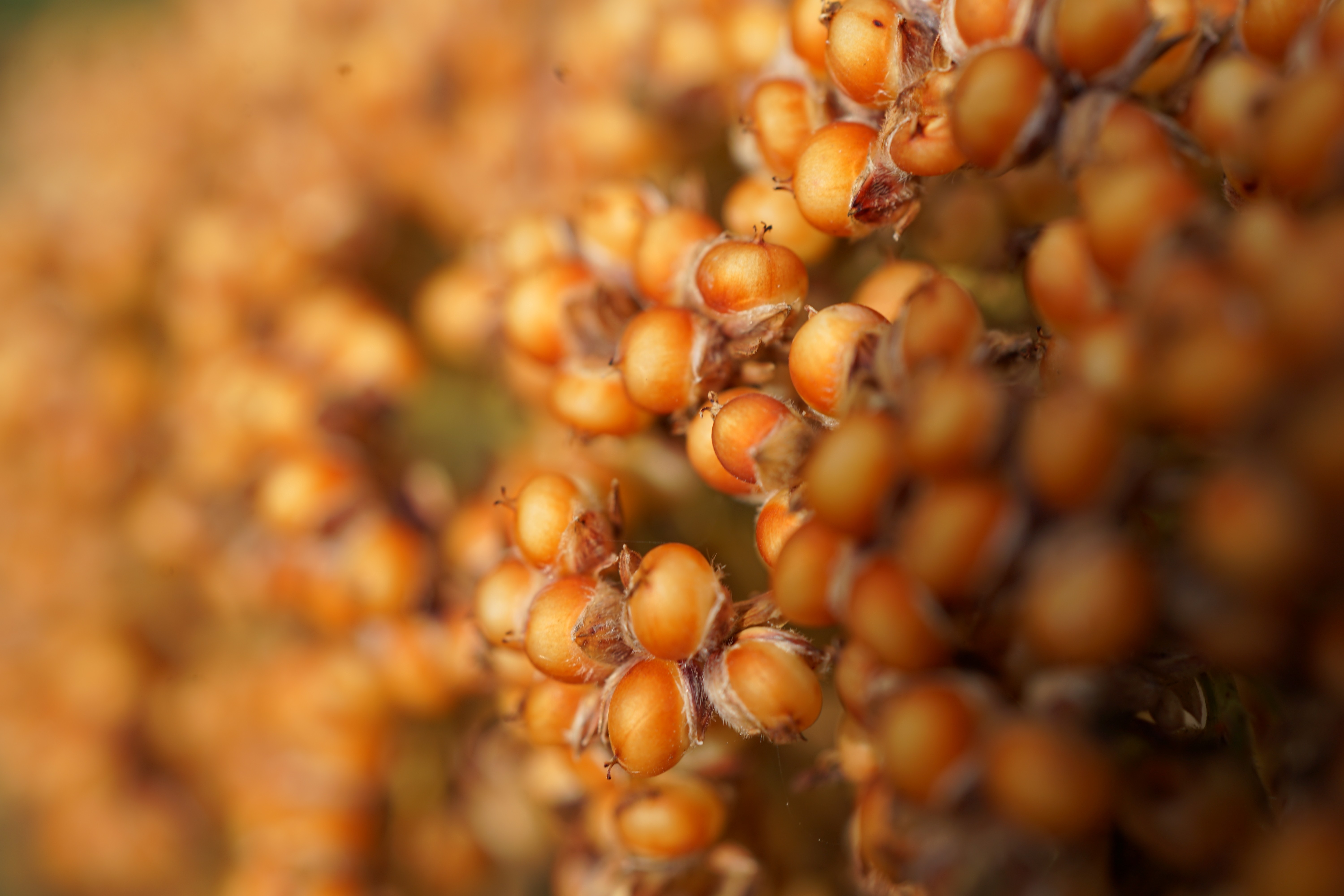
• Close-up of sorghum panicle with orange grains, showcasing the texture and color of the seeds.
    Grain sorghum

Grain sorghum - a real crop for the future!

Farmer Jan

operates a mixed farm and grows sorghum to enlarge his crop rotation as well as using sorghum for animal feeding. When it comes to feeding his pigs, he has full confidence in the strenghts of grain sorghum.

Heat, drought, diseases and pests: the future poses major challenges for agriculture. Grain sorghum provides the right answers! It is convincing because of its great adaptability to different temperatures, and soil conditions. With its high flexibility and robustness, it adapts to extreme conditions.

The advantages are not only reduced costs and more profitable production. Feeding grain sorghum is also a health benefit for my animals.
Farmer Jan

Benefits and advantages of grain sorghum

1

Tolerances

Sorghum is naturally drought and heat tolerant.

2

Requirements

Sorghum has got low nitrogen, pesticide and water requirements.

3

Usability

Grain Sorghum is a good alternative in animal and human nutrition.

Jan has six successful sorghum-growing
facts for you!

Man examining soil temperature while sowing seeds. Text: 'Make sure that the soil is warm enough when sowing.

> And you shorten the germination time by up to two weeks!

Grain sorghum often has advantages over other crops in cultivation on dry solis. Important: Before sowing sorghum, the seedbed should be prepared precisely! If you also choose the right time for sowing, you can significantly increase the yield prospects. The optimum sowing time is beginning of May to mid June.

Man kneeling and planting sorghum with a quote: 'Do not let too much grass grow over your sorghum!' on a neutral background.

> This is how you get an homogenous field emergence of your plants!

Grain sorghum is less demanding on soil quality. For an optimal yield, however, it is recommended to grow sorghum in fields with low grass pressure. This will prevent the plants from being overgrown by more robust native species, especially in the juvenile stage!

Sorghum matures from top to bottom. A man in a brown jacket looks at his phone, with a light background.

> Before harvesting, check the bottom 1/3 of the sorghum head for ripeness!

The optimal harvest time for sorghum is 35 to 40 days after flowering – when the grain is ripe, the leaves are still green. It is not advisable to wait until the leaves have dried out before harvesting. The grain dries quickly and the harvest takes place at a moisture content of between 15 and 20%.

Sorghum grains held by a man, accompanied by the text 'Sorghum is a real energy booster!

> Both for food and feed!

Grain Sorghum can be used in many ways in agriculture – not only because of its lower costs and profitable production. With its high content of nutrients, proteins and starch, it can be used especially as a feed component for animals as well as for human nutrition.

A man in a brown jacket stands confidently with crossed arms. Text states, 'My plants are healthy and strong.

> The corn rootworm has left the field!

Grain sorghum is particularly tough and resistant to diseases and pests. For example, the larvae of the corn rootworm cannot develop in it! This ensures a high yielding harvest, especially in infested areas!

Man with a dog beside him, promoting strong sorghum crops for fields. Text includes a question about looking for sorghum.

> KWS NEMESIS ensures a stable yield under difficult conditions!

Our sorghum product portfolio gets "new blood"! After KWS LUPUS, our first grain sorghum variety on the market, we are expanding our product range with KWS Nemesis. The difference between the two varieties: Lupus ripens early, Nemesis stands for medium maturity. Which remains the same: Both are hardy, resistant to pests and extremely drought-tolerant!

Grain Sorghum Cultivation Guide

KWS breeding program for grain sorghum

The next step for a high-yield harvest:
Our grain sorghum varieties

You are looking for a strong sorghum crop for your fields? Our grain sorghum product portfolio ensures a stable yield under difficult conditions! Our new variety KWS NEMESIS stands for medium maturity, KWS LUPUS ripens early. Which remains the same: Both are hardly resistant to pests and extremely drought-tolerant! For detailed information visit our country sides.

Find the right sorghum seed for your country!

Fifth in the world, on the rise in Europe!

Grain sorghum is the fifth most important cereal in the world, with a nutritional profile similar to corn. In Europe grain sorghum is used mainly for animal feeding. In other corners of the world sorghum is known for its versatility - human nutrition, producing of syrups, ethanol, silage or hay for feeding.

Map based on United States Department of Agriculture in “1000ha”

Map based on United States Department of Agriculture in “1000ha”

With it's drought and heat tolerance, Sorghum is naturally able to support farmers due to upcoming challenges posed by climate change.
Dr. Magdalena Buschmann, Product Manager Sorghum

Did you know?

Learn more about grain sorghum in feeding

Your contact partner

A man with glasses and short hair stands in a modern, well-lit environment. He wears a light blue shirt and looks directly at the camera.
Sergej Prezer
International Portfolio Manager Sorghum
Send E-mail
CONTACT