Please note that your browser is outdated and that contents may not be shown correctly. We highly recommend that you download a more modern browser like for example Microsoft Edge.
Discover the story behind the exhibits
Our stories
Sometimes it only takes one seed to start a story. At KWS, we have been sowing the future since 1856.
As an independent, family-owned company with strong values, we are constantly evolving, but we always rely on the many years of experience of our employees, who contribute their ideas and visions every day, allowing us to continue to grow together. With foresight, we are shaping a sustainable future, maintaining closeness to generations of farmers and being a trustworthy and reliable partner for all our customers.
Every story is therefore also an expression of one of our KWS values: Closeness, Foresight, Reliability and Independence.
Every exhibit represents one of the many stories that make up KWS. Here we give you the opportunity to experience some of them.
Click on the pictures to discover the stories behind the objects.
Rapid aid for earthquake victims in Turkey:
The two severe earthquakes of magnitude 7.7 and 7.6 on February 6, 2023, which affected 10 provinces, claimed so many lives that Turkey declared national mourning. At KWS, these events also evoked strong sympathy and the desire to support the local people.KWS Türkiye employees launched intensive relief efforts on the very first day of the earthquake. A WhatsApp group was set up immediately to draw up lists of the most urgent supplies; the necessary goods such as water, canned food, heaters, shoes, groceries, diapers, vests and hats were delivered directly to the victims. KWS colleagues around the world took part in a worldwide fundraising campaign. In addition, KWS decided to donate €100,000 from the company's own funds.
The “Man with the Cap” as a Visionary
Matthias Christian Rabbethge, born in 1804 in Klein Rodensleben, was a man with an eye on the future. As one of seven children, he grew up working in agriculture and understood early on how vital soil and yield were for life. Later, he became a successful farmer, cultivating sugar beets on the fertile Bördeböden.But Rabbethge thought further: he entered sugar production and tirelessly sought improvements in manufacturing to make the most of increasing yields. This attitude—the courage to embrace new ideas and recognize opportunities—still shapes KWS today. His portrait with the distinctive cap reminds us: foresight means combining tradition with innovation and creating solutions for the agriculture of tomorrow.
New muscle in the vegetable market with spinach
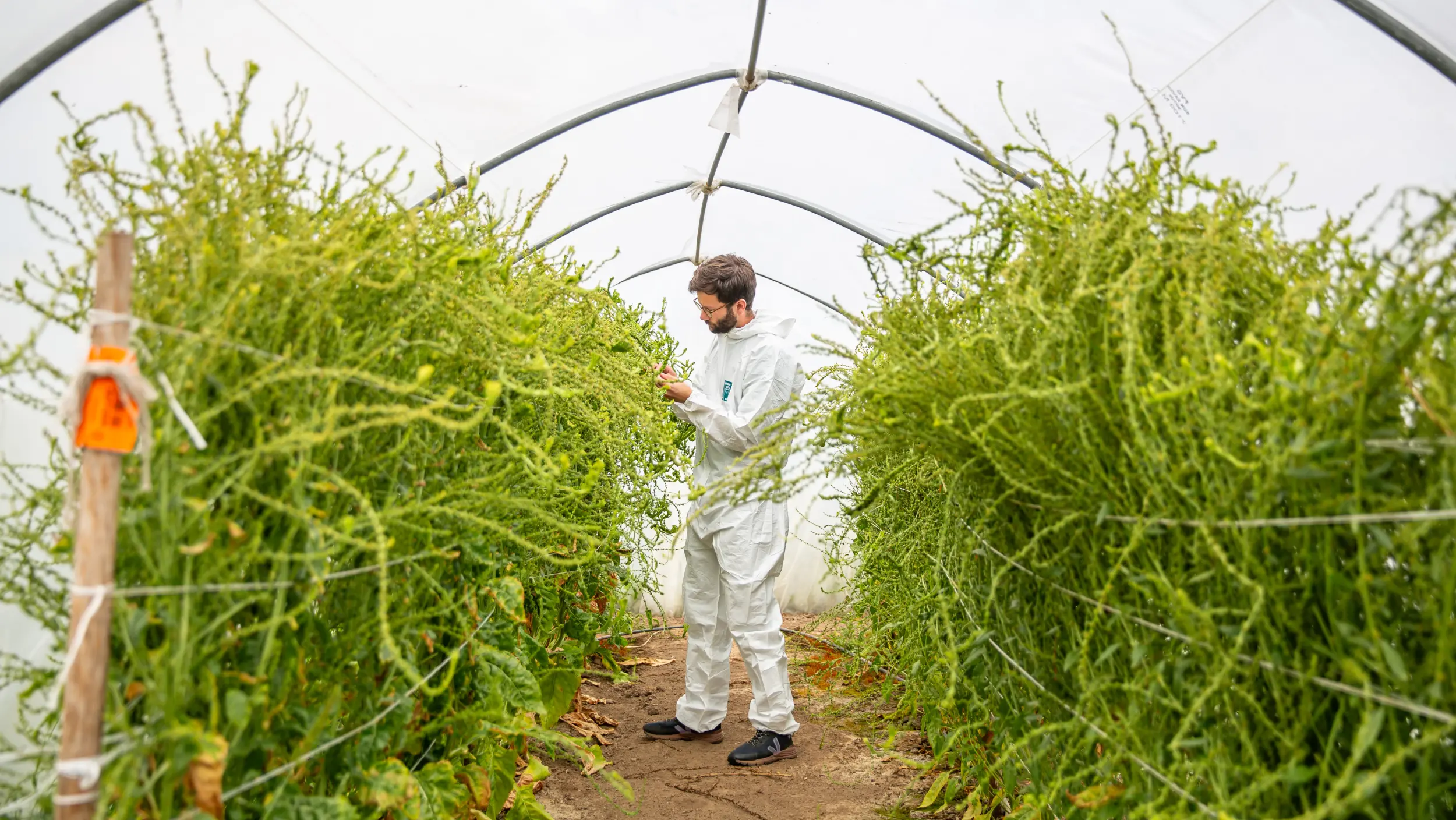
In 2019, KWS launched its vegetable seed business and acquired the Dutch market leader for spinach seeds Pop Vriend Seeds in Andijk. Our strategic goal is to build a significant long-term position in the vegetable seed market by establishing our own breeding programs. The acquisition of Pop Vriend Seeds is the first strong cornerstone for this business segment. Fittingly, the project to evaluate the vegetable sector was named "Olivia" – after “Olive Oyl”, the girlfriend of Popeye, the sailor who is known to gain his strength from wholesome spinach.
School Gardens in Brazil – Together for Education and Healthy Nutrition
KWS, together with the non-profit organization “Städte ohne Hunger e. V.”, supports school gardens in São Paulo, thus giving children from disadvantaged families access to fresh vegetables and healthy nutrition. The children plant, care for, and harvest the crops themselves – learning through play about agriculture, sustainability, and teamwork. The vegetables are used in school cafeterias, and children may take any surplus home. Around 5,000 children are already benefiting from the project.KWS has also supported further school garden initiatives with a focus on education in Berlin, Wageningen, and Einbeck.
The baton was passed on again
At the Annual General Meeting on December 6, 2022, Andreas J. Büchting stepped down from his duties and offices at KWS after 47 years and passed the baton on to Felix Büchting and thus to the seventh generation of the founding families. #ThinkingInGenerations means growing together. With high-yielding seed products and extensive knowledge, KWS supports its farmers in utilizing their full potential. This way, we ensure efficient agriculture with lasting success. Today and in the future.More about KWS Thinking in Generations
It's all about the right tool...
Leaf samples from all KWS stations worldwide must be exactly 5 mm in diameter for laboratory analysis in Einbeck. For 25 years, the leaf punches developed for this purpose have come from KWS' own workshop in Einbeck, which produces up to 250 a year or sharpens the used ones as required. The KWS workshop is also irreplaceable for smooth operations in other respects, as seed processing and production take place within a narrow time window. As it is often not possible to wait for external spare parts, the workshop manufactures them itself. State-of-the-art tools such as a 3D printer help with this.
The future of breeding is up in the air, among other things
KWS uses drones over its fields in order to produce new varieties even faster. The pictures taken by their cameras are analyzed on a computer to permit precise findings about plants’ growth. That helps the company to offer new seed to farmers sooner – a great advantage for agriculture. Compared to that, in the past, plant breeders had to walk around the trial field for days to assess the characteristics of the plants with the naked eye. The results were subjective, as each expert had a different view of the details. Of course, breeders still decide which seeds to develop today, but on the basis of much more detailed knowledge.Precision Farming: How farmers benefit from drones in plant breeding
Two locations join forces again...
The reunification of Germany also made it possible to reconnect with the Klein Wanzleben site: after the political changes, KWS returned to its original location. The decision was made to buy back the Klein Wanzleben breeding station, to carry out performance tests there and to set up a quality laboratory for sugar beet, and later also for corn. ZKW Züchtungsgesellschaft commenced operations on January 1, 1991: KWS invested around 10 million euros in modernizing the facility in order to once again use the good soils of the Magdeburger Börde with its low-rain continental climate for sugar beet breeding and propagation and to develop varieties specifically for the Eastern European markets.
Knights' armory in the greenhouse
The sunflower is one of KWS' strategically relevant crops. Due to its deep roots, it is more drought-tolerant than many other crops and thus optimally prepared for climate change. Sunflower breeding at KWS began in 2011 in Hungary, where the largest breeding station is located. Important traits such as resistance to fungi and herbicide tolerance are integrated into the best lines through the Trait Integration Program. Since its foundation 10 years ago, the volume of populations processed has quadrupled. Since 2021, the breeding station at Gran Canaria has also been involved. In order to carry out targeted crosses in the greenhouse, the mother plants must be freed from their anthers to avoid self-pollination. At this point, the knights' armor comes in: the flower buds in the center of the sunflower basket are cut out with a sword (scalpel) and even though the sunflowers do not fight back, the risk of cutting oneself would be too great without a chain glove-clad hand and would not comply with KWS' work safety standards.
Community and Closeness at KWS
Whether at the Bierstadtlauf or in the dragon boat team – at KWS, community comes first. For years, our employees have enthusiastically taken part in the Bierstadtlauf. Because we fielded the largest team three times in a row, we were allowed to keep the Team Cup permanently – a symbol of our togetherness and our closeness to one another. Our team spirit also shines on the water: the KWS dragon boat team regularly competes successfully in regattas. Both competitions are used to raise donations for local clubs. For every kilometer run or paddled, we support projects in the region. In this way, we combine sporting ambition with social commitment and strengthen our bond with Einbeck and the people who live here.
Who won the 2010 World Cup? Was it KWS?
2010 World Cup in South Africa: a good moment for a table soccer tournament, organized by KWS trainees as project work. Each department could put together a team of six people. "Beets to the final!" or "Better the board than the backlog" competed against each other. A total of 36 teams played in a preliminary round followed by a knockout round. The games, which took place during the breakfast and lunch breaks, were watched with excitement and some were even broadcast on screens. The verdict: The KWS kicker teams were more successful than the German team at the World Cup!
A Look Beneath the Surface – X-ray Technology for Premium Seed
At first glance, a sugar beet seed appears to be a small and unremarkable grain. But the X-ray image on the shelf tells a different story: it reveals what remains hidden to the naked eye — whether a strong embryo has developed inside, whether twins are present, or whether the seed is empty. This is exactly the perspective used by the KWS quality laboratory. With highresolution 3D Xray technology and automated processes, thousands of samples are scanned each year. A robotic arm positions each container with millimeter precision while the computed tomography system captures layerbylayer images of the seed’s interior. An algorithm then analyzes the structure of every single seed: embryo, cavities, and degree of filling. The result is an objective and precise quality assessment for the further processing of each individual seed lot. By selectively removing empty and twin seeds, it is ensured that every seed grain placed in the field has the best possible characteristics. This is essential to guarantee uniform and vigorous crop emergence. The X-ray image on the shelf symbolizes this highprecision work. It reflects not only the technology, but also the high standards behind it: KWS looks deeper, examines more closely, and uses stateoftheart methods to deliver the best seed to farmers.
What is a polarimeter?
Matthias Rabbethge Jr. (1832-1885) was the first person in Germany to select beet roots for seed production according to their specific weight in 1862. The polarimeter was groundbreaking for the method he developed for determining sugar content, initially from the juice and later from the pulp of the beet. The principle is based on the deflection of a light beam by a clear solution containing sugar. The polarimeter allows a direct reading of the sugar content due to the deflection. This significantly improved the selection process. Over time, the method was further developed and streamlined so that it is still used today: a cornerstone of successful breeding.
KWS Phenofactory – Where plants become visible
At KWS in Einbeck, state‑of‑the‑art cameras, sensors, and robotics create a highly precise picture of how plants grow, respond, and differ from one another. This detailed phenotyping—the measurement of a plant’s visible traits—makes it possible to objectively compare thousands of lines and significantly accelerate breeding progress. At its core, however, the facility enables a deeper understanding of plant characteristics, such as responses to drought stress, infections, or herbicide effects. The small 3D‑printed robot on the shelf symbolizes the automated systems that carry out this work every day. They move plants, measure traits, and collect data with a level of precision far beyond what the human eye could achieve. In this way, the facility becomes a place where external characteristics are systematically captured and transformed into valuable insights for breeding—hence the name Phenofactory. It reflects the interaction of technology, expertise, and responsibility that drives KWS to strengthen agriculture for the future.
Jugend forscht – the talent factory with model character!
PS.SPEICHER and KWS support the state competition "Jugend forscht", the Young Researchers Competition, as sponsoring companies and organizers, and thus bring young researchers to Einbeck every year. The aim of the competition is to spark interest in science, technology, engineering and mathematics (STEM) and to promote the knowledge of young talents and their spirit of research. During the competition, KWS also invites the young researchers to the KWS site, offers guided tours, presents hands-on stations in the work environment and provides information about training opportunities - research and a thirst for knowledge surround us everywhere and will therefore continue to be promoted by us in the future!
Family is a top priority at KWS!
The plant shown here was officially opened in Ukraine in 2016. On the occasion of the inauguration ceremony in November 2016, the then project manager for plant construction took his father to Ukraine, who was celebrating his 65th birthday at the time. Excited, he and his then 3-year-old grandson built this model of the plant out of matchboxes. As a family business, we are proud when our values are directly supported and lived by our employees.
A special kind of trademark...
The rye king Ferdinand von Lochow made the pith helmet his trademark to protect himself from the sun after being wounded in the war. Ferdinand III von Lochow (1849-1924) began breeding winter rye as a farmer in Petkus in 1881. He achieved great success in 1892 with the "single plant selection with trait testing", which he first used, and laid the foundation for today's yield progress and the company KWS LOCHOW GMBH. Since 2015, KWS has honored him with a scholarship named after him: In addition to one year of financial support, the scholarship includes a two-and-a-half-month internship at a KWS location. There are also many opportunities to carry out an independent research project for the final thesis.
Once upon a time, in a cloak- and-dagger operation…
After the end of the Second World War, the Klein Wanzleben company was situated in the Soviet occupation zone and expropriated. However, at the end of June 1945, British soldiers brought the Rabbethge and Giesecke/Büchting families from Klein Wanzleben to Einbeck with 60 tons of elite seed before the Russian army marched in. "Establishing our company was a high priority," says Carl-Ernst Büchting, looking back on the multiple subsidies from the British. With the leading sugar beet variety "Kleinwanzlebener E", KWS quickly got back on the road to success.
KWS Elite Vault – Our Seed Treasury for the Future
In the KWS Elite Vault, we safeguard what is most valuable to our breeding programs: more than one million seed samples of sugar beet, fodder beet, rapeseed, cover crops and pea – highquality breeding material from current and past multiplication cycles. This genetic diversity forms the foundation for developing highperforming and resilient varieties that can thrive under future conditions. Like a true treasure chamber, the vault stores samples that carry key characteristics such as drought tolerance, disease resistance or efficient use of resources. They enable breeding progress and secure longterm yield stability for our crops. To maintain their quality, the samples are stored under carefully controlled conditions: a constant temperature of 6–8 °C and 30 % humidity preserve germination capacity for many years, ensuring that material is available “just in time” for our global breeding teams. The Elite Vault stands for foresight, responsibility and the protection of genetic resources. It preserves the knowledge built over generations and provides the basis for varieties that farmers and food systems around the world will rely on in the years to come.
An orange-colored bicycle peloton sets off...
"Celebrating the orange spirit": for three days in September 2006, KWS celebrated an unforgettable anniversary party with 1,300 KWS employees from 27 nations under the motto: KWS YOUnited. The about 300 international guests were welcomed on the reception night against the historic backdrop of Einbeck's market square. The following day, a unique bicycle tour took place in Einbeck. The orange-colored peloton, several kilometers long, went from the KWS site through the town to the Wetze breeding station located twelve kilometers away.
Innovation needs room to develop – just like art
As a family-owned company, KWS stands for tradition, a down-to-earth approach and for successful plant breeding, but also for growth and open-mindedness. It is therefore particularly important to us to encourage diversity, individuality, and creativity. Coming from this point of view, art and culture as a special offer for employees and society become a key element of our commitment. With the sculpture "StuhlQuetschMann" (ChairCrushMan), the artist Rolf Behme (born 1955, studied art in Kassel, artist and art teacher since 1978) also allows the viewer scope for their own interpretations. In Behmes' work, the chairs become synonyms of human behavior, representing relationships and ways of relating. Building on this, the Man-series, sculptures that look like human beings who are falling, flying, or set in motion by the wind, further explores the topic. One of these figures struggles with a chair, crushing it. Does this refer to a struggle between two identities or is it a personality wrestling with itself?More about Art at KWS
KWS for breakfast?
It's all about taste - the same goes for plant-based alternatives to animal protein. While many people are already familiar with oat milk, pea milk has yet to really catch on. The start-up company VF Nutrition GmbH wants to change this with the Vly brand, but has so far encountered a problem: protein isolates, the basis of pea products, can vary greatly between different pea varieties, which can drastically change the taste. Thanks to a multi-year development partnership with KWS, the developers at Vly now for the first time have the opportunity to work with peas that have been specifically bred for their flavor traits. "Nutritional Food Ingredients" is therefore one of four future topics within our Strategic Plan 2031, which also includes making peas more usable as a basis for plant-based foods.
„Trust is, in practice, an essential complement to the values of KWS. I am talking about trust in one another, in the ability of others. This is the engine and fuel that power KWS, both internally and externally.“
Dr. Felix Büchting,
Spokesman of the Executive Board of KWS
 Discover the story behind the exhibits


